How two buttons and a face fixed Easyfairs' returning-visitor problem
Sam O'Connell runs marketing across around 30 large B2B exhibitions in seven countries. When a long-running engineering show couldn't get past visitors to come back, the fix wasn't a redesign. It was a five-second choice and a person on screen instead of another paragraph.
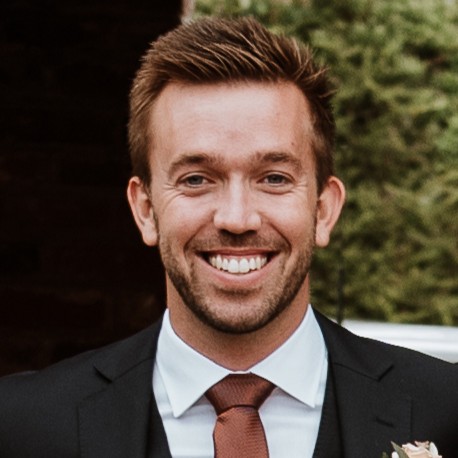
The first word that comes to Sam O'Connell's mind when the conversation turns to humanising is community. Easyfairs classifies itself as an event organiser, but he sees the role more as being a guardian of communities: helping guide the conversation towards what is next, understanding what the challenges are, and bringing people together around them.
If that is the job, the only word that matters is people. There is no point putting a logo or a brand in front of a community, he argues; you should be putting the people in front of it. When people think about one of the group's events, he would rather a person came to mind, the marketer, the head of cluster, whoever that community actually knows, rather than “logistics automation, Madrid”.
Because what is the job, at the end of it? Bringing people together into rooms. Which raises the obvious question: why, on the websites and in the emails, do the people never feature, or when they do, why are they photos and videos of people walking down alleyways and standing at booths? You can go onto every single event website, he says, and see the same structure of photo or video.

What that looks like in practice
Guardian of the community is an easy principle to agree with and a harder one to actually act on. In practice, for Sam, it means the job stops being about writing the right paragraph and starts being about routing: getting each visitor, each lead, each subscriber to the message and the face that already matches where they are, rather than putting one page or one email in front of everyone and hoping it lands. A returning visitor needs something different from a first-timer. A visitor at a multi-show event only cares about one of the halls. A cold sales lead relaxes the moment they can picture who is about to call them. A few examples from across the portfolio this year show what that looked like.
Advanced Engineering: routing returning visitors
Advanced Engineering is a long-running show built around the engineering world, and it carries a challenge almost every organiser recognises: returning visitors. How do you get someone who has already been once to come back? The site already had a landing page split for new visitors versus returning ones, but it lived below the fold, and with an average dwell time of around a minute, almost nobody scrolled far enough to reach it.
The fix was not a redesign. It was a single short video with two buttons up front: if you have been here before, click here; if you have not, click here. Whichever a visitor picked, the video routed straight to the right message immediately, no scrolling required. Returners got someone on camera talking through what was actually new this year, rather than a banner they had already seen.
Scaling it: the right face for each show
Once the idea had proved itself, Sam looked for someone who could front the same approach at scale. He found her in Noura, a colleague with a PR background who turned out to be a natural on camera, and put her in front of Paris Packaging Week, Easyfairs' largest event and what the team internally calls a “fruit platter”: four separate shows bundled under one roof. Noura's videos simply asked visitors which of the four they had actually come for, and the interactive buttons across the campaign averaged a 50 per cent engagement rate.
The same routing logic worked off the website too. A cold-contact email campaign built around the same kind of video, rather than the usual copy, got a 48 per cent open rate.

It worked in person too. At the show itself, Noura was repeatedly stopped by attendees who recognised her from the videos on the website, a sign the experience had made the brand feel familiar before anyone arrived.
Once Noura's videos were visibly working, other teams did not need persuading. “I love what Noura's doing, can we do that?” became the request, and Sam found himself barely involved: the format had started spreading on its own. His rule for handing it off is almost bowling. Everyone gets the same ball and the same pins and knows the aim, but everyone has their own way of throwing it. Give a show the format and let the team work out how to run it, rather than trying to script every show the same way.
You still cannot curate serendipity
The biggest change he has seen is that visitors and exhibitors are better educated than ever. They arrive knowing why they are coming, having done their research, looking for someone to validate whether that research is true. That applies to both sides of the floor.
Personalisation has been discussed for years, and AI has made it faster and more advanced. But it is producing a block: here is your curated everything, you do not need to worry about the rest. That only works up to a point, he says. You still need the human spark to convince.
It is the same as any buying cycle now. You can ask ChatGPT or Claude for the top five tools for your challenge and get a list. Someone still has to do the storytelling behind it and understand the nuances before a purchase happens, which, in his view, makes events more important, not less. People arrive armed, and they come to validate.
How to apply it
- Check your own dwell time and where the fold sits before adding another landing-page split. If nobody scrolls to it, it does not exist.
- Replace one static choice, new vs returning, exhibitor vs visitor, with a single short video and two buttons. Route from there instead of hoping people find the right section.
- Name the one internal person your community already half-recognises, and put them on camera before you commission another script.
- Try the same signpost-video trick on your worst-performing email segment. Cut the copy, not the video.
- Once one show or one segment proves it out, hand the format off rather than centralising it. Let the results do the recruiting, the way Noura's did.
 Watch the full session