The video system behind Easyfairs' most human marketing
Charlie Taylor-Martin is Marketing Campaigns Manager at Easyfairs, covering 33 shows across the UK, Europe, North Africa and the US. A look inside how they're using video to achieve all-time high open rates, engagement and registration numbers.
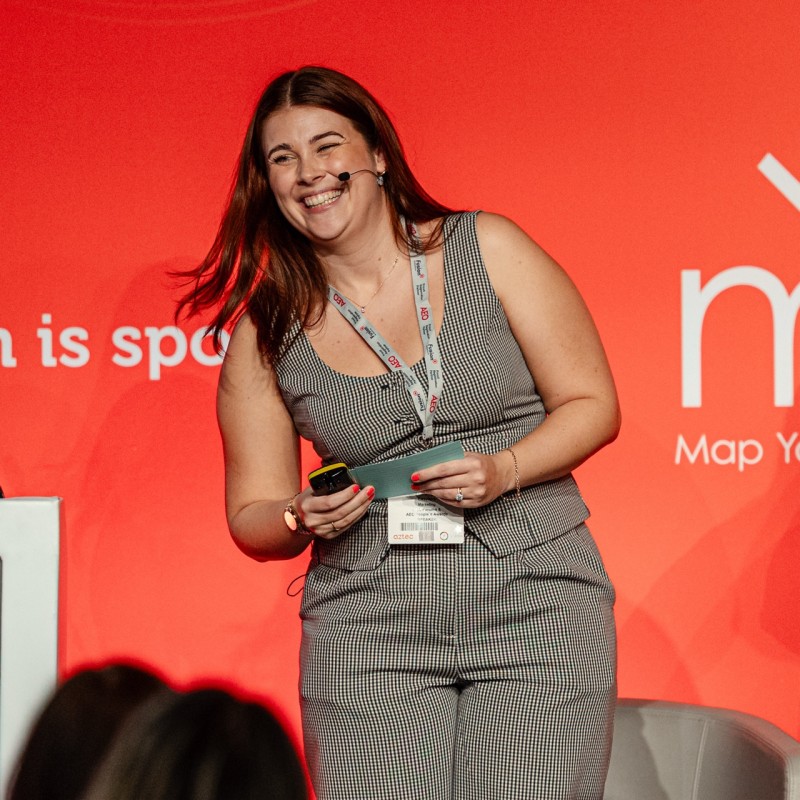
Events are a people business, and Charlie Taylor-Martin's starting position is that the marketing should feel like it was made by people too. Traditionally, she says, a lot of event marketing has been static: a website updated through the year that never speaks to the human side of the job. Visitors want reasons, not statements. Being convinced by a person carries more weight than a block of text.
That gap has widened as AI-written copy has spread. “I think it makes it more obvious than ever when something's actually been written by a human,” she says. AI is useful to her team for analysis and for turning information into a usable format. What it should not be doing, in her view, is writing the questions and supplying the answers, or standing in for actually speaking to people. That is where trust breaks.
Which is what makes video such a direct answer. A person on camera is evidence rather than assertion: a visitor can see who runs the show, hear how they talk about it, and decide whether they believe them. Very little else on a website does that in ten seconds.
The practical question is the one every marketer hits next. Video only works if the people in it are comfortable, and most teams do not think of themselves as on-camera talent. Charlie has filmed across 33 shows and four regions, so she has had that conversation many times, and her approach starts well before the camera comes out.
1. Only ask people to talk about what they already talk about
Plenty of people are nervous first time, and the worries are consistent: they will not be polished enough, they will say the wrong thing, a recording lives in the ether forever. Charlie describes it as more pressure than a conversation over lunch, which it is.
What has made people comfortable is only ever asking them to talk about things they talk about every day. Nobody is asked to research a topic or handle something highly technical. The event director talks about the show. The content manager covers the conference programme. Sales talks about exhibiting. Confidence in the subject, she notes, reads clearly on camera, as it does anywhere else.
2. Match the format to the person
Before she asks anyone, she works out what format suits them, ideally by reading the room in person rather than over email. Three come up repeatedly.
Exhibitors who want brand awareness get a walk-and-talk: she visits their factory or office, films a relaxed conversation about what they do, and the team edits it afterwards. Colleagues and speakers who are already comfortable on camera get a link and one clear request, usually a 30-second overview of their session. A few video-savvy partners need nothing at all, and send a finished cut once the show is over.
What does not work, she says, is an AI-written prompt asking someone to record a video. The ask has to be framed around what it does for them.
3. Post as yourself, not only as the show
The shift came while she was a marketing manager on one of the group's engineering shows. Posting as an individual rather than on the branded event page gave her far more room: she could talk about what she was looking forward to at the show, or an advisory group she had run, without adhering to strict brand guidelines.
Engagement rose, but the more useful change was in the responses. People messaged, emailed and commented in ways they would not have on the brand page. “It just felt like I was having a conversation with people,” she says. Her conclusion: this is not really about video as a feature, it is about getting the idea of the event across in a way that resonates.
4. Use the human on the commercial pages too
Most teams put their video effort on the visitor side, because that is where registrations come from. Easyfairs started putting salespeople on the exhibitor enquiry form instead, on the grounds that the step feels like admin, like shouting into the void. Completing that form is a real decision: is this worth the budget, is it the right event, and you know you are inviting a follow-up call.
Seeing the person there, then hearing from that same person, changes the character of it. It is not an automatic response, and it is not a chatbot whose main function is passing you to a human. Trust matters at least as much for exhibitors as for visitors, she argues, because they have more riding on the show working.
5. Reuse the footage across channels
One piece of the Paris Packaging Week campaign is worth copying directly. The team took screenshots from the key videos, homepage, exhibitor list and conference, then sent them as a “why you should attend Paris in 60 seconds” email. It began as a conversion email to people who had already registered, and the open and click-through rates were, in her words, ridiculous.
So they stopped treating it as a conversion-only tactic. The format now runs across the portfolio: click here to hear the event director on why you cannot miss the show, click here to hear the content director on the sessions worth booking. It suits the audience that arrives via paid social and PPC, who want short, sharp content rather than long emails or reports.
Where to start
- Do not overcomplicate it. Easyfairs began with a couple of videos recorded on phones in the office.
- Pick people who know the subject cold, and let them talk rather than present.
- Put a face on the exhibitor enquiry form, and make sure that face makes the follow-up call.
- Plan how the footage will be reused, across email, social and the website, before you film it.
“It's a bit scary, but putting yourself out there is the best thing you can do,” she says.
 Watch the full session