The week after the show is the week everyone wastes
The default is to swap the dates, add a register-interest button and let the site gather dust. Charlie Taylor-Martin's team did something else at Paris Packaging Week.
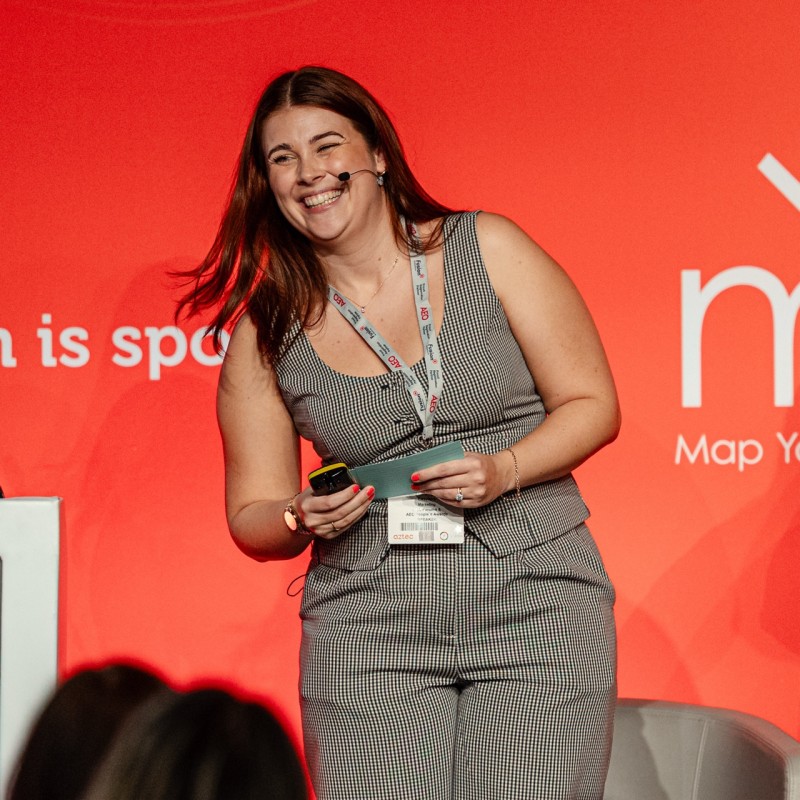
Paris Packaging Week ran an interactive video campaign across the website in the build-up, in French and English, so visitors got the same experience whichever side of the site they landed on. Engagement was strong. Then the show ended, and the videos were all in the wrong tense: this is what you are going to see, this is what you cannot miss.
Charlie's team could have pulled them down. What stopped them was a simple observation about timing: the audience is at its most engaged immediately after a show, not before it. That is the moment you want the survey filled in, the photos shared, the testimonials given and next year's dates in the diary.

1. Record the thank you as a person, not a banner
The Paris team filmed the replacement videos on-site, the same afternoon the halls closed, before the stands came down and everyone scattered. Not a highlights reel: someone from the team thanking visitors for the sessions they'd filled and the conversations they'd had, a note about the 2027 dates, and a direct, on-camera request to complete the show survey so next year's programme gets built around what people actually asked for. The videos went live in the exact homepage slot the pre-show set had occupied, still in French and English, so the swap read as continuity rather than a placeholder page.
Charlie's framing is that this reads as a personal invitation and a personal thank you, which is a different thing from changing the website over to next year's dates and adding a register-interest button. It's the difference between telling a visitor the show is over, and thanking them for having been part of it.
2. Put the survey, the report and the photos behind the same video
The post-show video is a routing device as much as a courtesy. In Paris, that one thank-you video sat on a single post-show hub alongside the full show report as a downloadable PDF, photo galleries split out by hall and by day so exhibitors could find their own stand, and the survey embedded directly on the page rather than linked out to a separate form.
Everything an attendee might want in that fortnight sits reachable from one place, introduced by a person rather than a wall of links. That matters most for the survey: a visitor who has just watched someone ask them, by name, to fill it in behaves differently to one who spots a banner on the way out.
3. Use it to move people across the portfolio
Easyfairs runs a large packaging portfolio, so the post-show moment is also the moment to say there is more. For Paris Packaging Week that meant naming the next three dates in the calendar, London, Birmingham and Milan, each with a one-line reason a Paris visitor specifically might want to be there. Charlie describes it as a personal invitation: if you enjoyed this show, here is the next one that fits, and here is how to get there, rather than a cross-sell banner bolted onto the same page.
That framing supports the portfolio view: not a series of separate events competing for the same inbox, but one ongoing experience with 365-day content around it, where finishing one show is the moment you're introduced to the next, not the moment the relationship goes quiet.
The post-show checklist
- Film the thank-you videos before you leave site, while everyone is still there and still buzzing.
- Publish them the day the pre-show set comes down, so there is no gap.
- Attach the survey, the post-show report and the photo galleries to that same page.
- Name the next show in the portfolio and make the route to it obvious.
 Watch the full session